CREDAI-MCHI Hosts the 1st Ever Property Exhibition Exclusively for Channel Partners
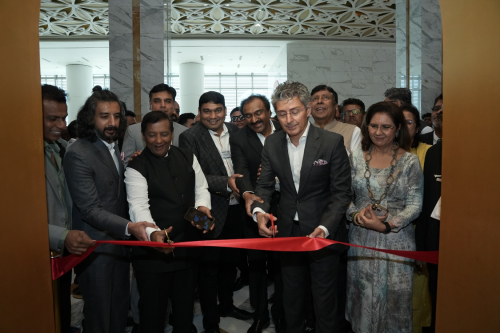
CREDAI-MCHI successfully organized the 1st Ever Property Exhibition exclusively for Channel Partners on Wednesday, 6th May 2026, at Jio World Convention Centre, Mumbai.
The landmark initiative brought together leading real estate developers and 2,000 plus of channel partners under one roof, creating an unparalleled platform for networking, business generation, and industry collaboration. The exhibition showcased new project launches, exclusive inventory, attractive brokerage opportunities, and special incentives designed specifically for the channel partner community.
With participation from over 50 leading developers and support from 45 plus channel partner associations across MMR, the event witnessed an overwhelming response from the real estate fraternity. The exhibition enabled direct interactions between developers and channel partners, fostering meaningful business relationships and opening new avenues for growth.
As a first-of-its-kind initiative by CREDAI-MCHI, the event reinforced the organization’s commitment to empowering channel partners and strengthening the real estate ecosystem through innovation, collaboration, and business opportunities.
CREDAI-MCHI Leads Constructive Dialogue with BMC on Key Policy Reforms
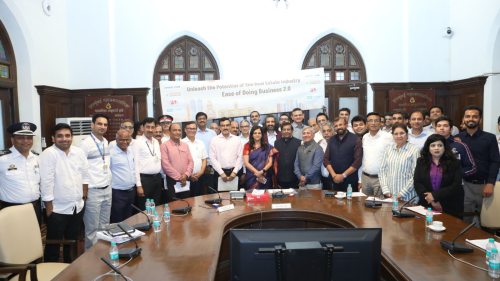
A high-level delegation from CREDAI-MCHI led by President Sukhraj Nahar, President-Elect Bandish Ajmera, Past President Domnic Romell and Mayur Shah, along with Vice Presidents Dhaval Ajmera and Sunny Bijlani, Secretary Rushi Mehta, Joint Secretaries Ricardo Romell, Harshul Savla and Prashant Khandelwal, Joint Treasurers Jayesh Chauhan and Hussain Lalani, along with Managing Committee members Naman Shah, Priya Gurnani, Chintan Sheth, Aditya Mirchandani, Kaivalya Shah, Amit Agaskar and Gopal Narang, met the Hon’ble Municipal Commissioner Ashwini Bhide along with senior officials, including the Chief Fire Officer on May 26, 2026.
The meeting was held in conjunction with the Joint Task Force comprising representatives from NAREDCO, BDA and PEATA, and focused on several long-pending policy and procedural reforms impacting the real estate sector.
Among the key outcomes discussed were significant policy clarifications and process improvements. The BMC confirmed that PCO charges are proposed to become a one-time payment for the entire project cycle, linked to AutoDCR, instead of an annual levy. The administration also assured representation to the Forest Department regarding plantation permissions at SGNP for Tree NOC compliance.
Importantly, the administration clarified that Regulation 33(12)(b) remains an integral part of DCPR 2034 and is neither on hold nor being scrapped, contrary to market rumours. Discussions also focused on streamlining operational parameters to ensure that the original intent of road connectivity under the regulation is effectively achieved.
Further, the BMC agreed to send a reminder to the Urban Development Department regarding extension of the Premium Policy. Standardisation of the CFO approval process is also expected shortly through a defined Terms of Reference (TOR), aimed at ensuring greater uniformity and predictability in approvals.
Another important discussion revolved around harmonisation of clubbing norms under Regulations 33(10), 33(11), and 33(20). The BMC indicated that it would recommend extending similar liberal clubbing provisions to 33(20) schemes while maintaining appropriate fiscal safeguards.
Additional reforms discussed included issuance of SOPs for SWM NOCs, simplified norms for high-rise buildings between 120 metres and 180 metres, extension of departmental remark validity in line with RERA timelines, review of road widening procedures for roads below 9 metres, and integration of ward-level charges with AutoDCR systems.
Lastly the BMC presented “CivilTwin” — India’s first AI-powered Digital Approval Twin for building permissions, developed specifically for the BMC. The platform features AI-assisted scrutiny, automated compliance checks, document verification, zoning analysis, and predictive readiness assessments. By enabling applicants to simulate the entire scrutiny process before formal submission, the system is expected to bring greater transparency, efficiency, and predictability to the approval ecosystem.
CREDAI-MCHI reaffirmed its commitment to working collaboratively with the administration to facilitate policy reforms that promote ease of doing business while ensuring transparent and efficient urban development. Members will continue to be updated as the respective policies and circulars are formally issued.
Meeting with Shri Sanjay Mukherjee, MMRDA Metropolitan Commissioner on May 27, 2026
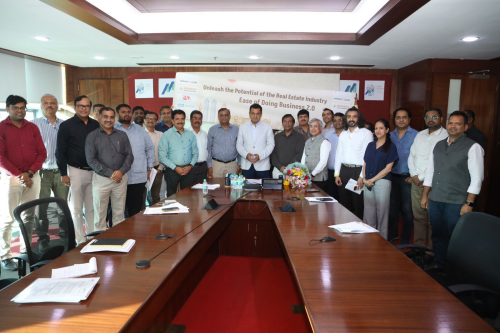
The Joint Task Force met with MMRDA Metropolitan Commissioner Shri Sanjay Mukherjee and his team to discuss key development issues across Bhiwandi, Boisar, Navi Mumbai, Palghar, Raigad, and Uran-Dronagiri, where MMRDA serves as the Special Planning Authority.
The meeting was attended by CREDAI-MCHI office bearers and chapter representatives, along with representatives from NAREDCO. Key discussions focused on the utilization of additional FSI in BKC, the development potential of Boisar as a satellite city along the Bullet Train corridor, sustainable development practices in Bhiwandi, and land acquisition concerns in the Raigad and Navi Mumbai regions.
The Commissioner responded positively to the issues raised and welcomed CREDAI-MCHI’s request for regular interactions with the MMRDA administration to address regional development challenges more effectively.
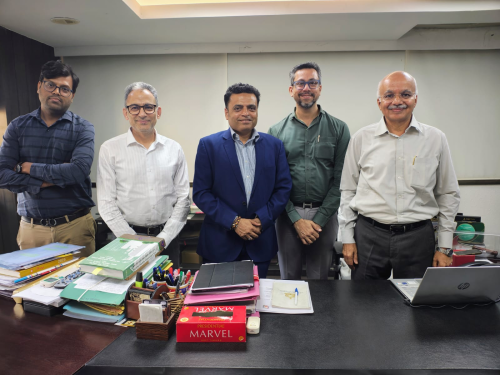
Meeting with Shri Santosh Warick, Director, Maharashtra Fire Services
On 29th May 2026, CREDAI-MCHI representatives met Shri Santosh Warick, Director, Maharashtra Fire Services, to discuss the proposed modifications to Provision 56A under the Special Safety Control Regulations for buildings vulnerable to man-made disasters. The meeting focused on seeking clarity regarding the interpretation and implementation of the proposed provisions, with an objective of ensuring effective compliance while addressing industry concerns. The interaction was constructive and helped strengthen coordination between the regulatory authority and the real estate sector.