
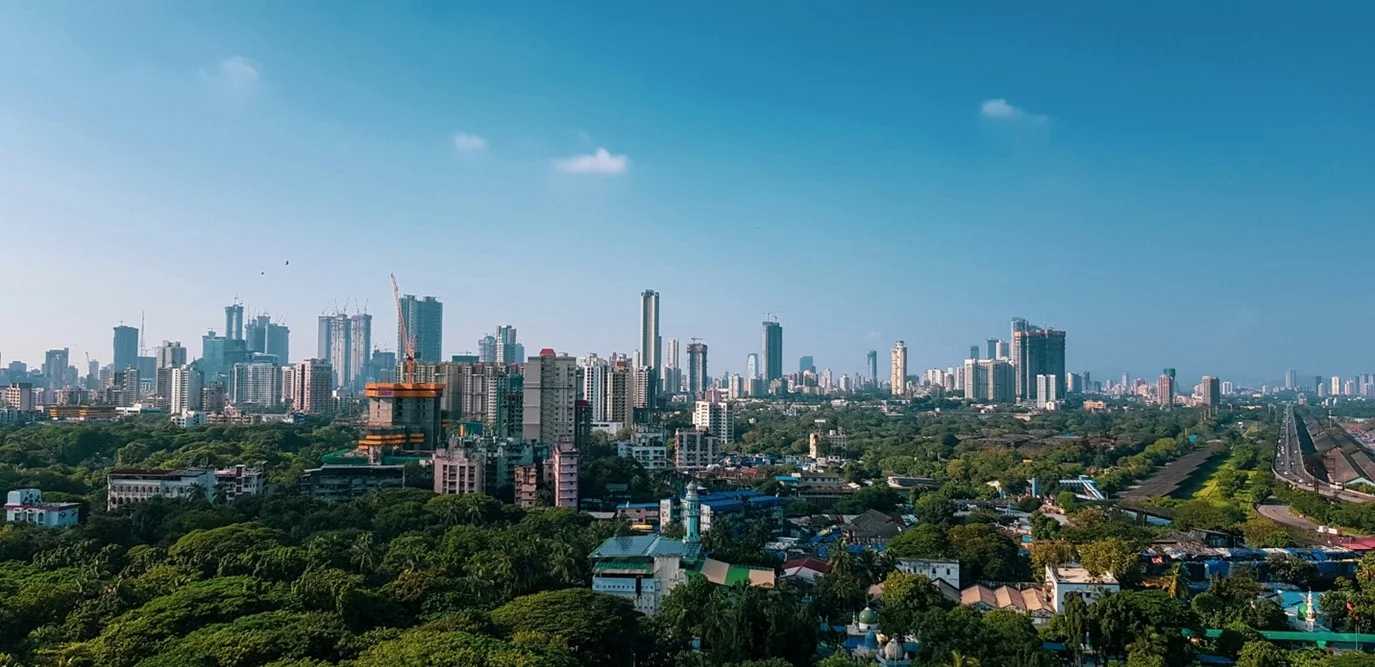
Mumbai’s skyline is not shaped by concrete and steel alone. It is shaped by regulation. Behind every office tower, every redevelopment project, every metro-influenced growth corridor, lies one rulebook that determines what can be built, where it can be built, and whether a project is approvable at all.
That document is the Development Control and Promotion Regulations — DCPR 2034.
If you have spent any time in Mumbai real estate, you have heard the acronym. It is the backbone of every developer’s P&L. It comes up in board meetings, site visits, legal opinions, and late-night conversations between architects and consultants. Everyone references it. But very few people have sat down to understand it as a whole — as a system, rather than a collection of clauses to be navigated project by project.
That is what this column is for.
Over the next eight weeks, I will be breaking down DCPR 2034 — Mumbai’s comprehensive regulatory framework for development — one topic at a time. The goal is to give every developer, architect, investor, and industry professional a working understanding of how this framework is structured, what it is trying to achieve, and how to read it intelligently. We start at the very beginning: what DCPR 2034 is, where it came from, and what makes it a significant step forward for the city.
Start here: what does DCPR stand for?
Development Control and Promotion Regulations. The name captures the intent well. Mumbai is one of the world’s great cities — roughly 20 million people, a narrow peninsula, extraordinary demand for space. Governing how that space gets developed requires a framework that is both precise and comprehensive.
Often simply referred to as DCPR, it is arguably the most important document governing Mumbai’s nearly Rs. 15 trillion real estate economy and the future growth of a metropolitan region expected to house over 30 million people in the coming decades.
DCPR 2034 is that framework for every plot of land under the BMC’s jurisdiction — the whole of Greater Mumbai. Notified by the Maharashtra government in 2018, it is designed to guide the city’s development through the year 2034.
Its legal foundation is the Maharashtra Regional and Town Planning Act, 1966. Under that Act, every municipal body is required to prepare a Development Plan — a long-term vision for how the city should grow. DCPR is the operational instrument that makes that plan actionable. The Development Plan articulates what Mumbai should look like. DCPR 2034 governs how it gets built. Yet, despite influencing billions of rupees in investment decisions every year, few practitioners truly understand the framework in its entirety.
Building on what came before
Mumbai’s previous development regulations — DCR 1991 — served the city for nearly three decades. That longevity is itself a testament to how foundational good regulation can be. By the 2010s, however, the city had evolved significantly, and the government recognised that a more sophisticated, forward-looking framework was needed to match Mumbai’s ambitions.
Three areas in particular called for a more refined approach.
Aligning density with demand. Mumbai’s growth had outpaced the density parameters set in DCR 1991. DCPR 2034 recalibrated FSI — the key measure of how much can be built on a given plot — to better reflect where the city actually needs to grow and how much.
Connecting development to infrastructure. DCPR 2034 introduced Transit-Oriented Development zones, a progressive concept that enables higher FSI in areas well-served by metro and rail infrastructure. It is a logical and elegant idea: allow the city to grow densest where it can best support that growth.
TOD has emerged as a defining principle of successful cities worldwide. Hong Kong, Singapore, Tokyo, and London have each demonstrated that higher density around mass transit corridors improves productivity, reduces commuting times, and promotes sustainable urban growth. DCPR 2034 represents Mumbai’s attempt to align itself with these globally accepted planning principles — a hallmark of the world’s most liveable cities.
Strengthening the TDR framework. Transferable Development Rights — the mechanism by which landowners whose plots are acquired for public purposes receive the right to build additional area elsewhere — were significantly refined under DCPR 2034. The new framework brought greater structure, clarity, and predictability to TDR issuance and utilisation, benefiting both landowners and developers.
DCR 1991 vs. DCPR 2034 – at a glance
<tdDCR 1991DCPR 2034
| Dimension | DCR 1991 | DCPR 2034 |
| FSI basis | Computed on net plot area | Computed on gross plot area |
| Density vs. infrastructure | Largely uniform across locations | TOD zones link higher FSI to transit access |
| Fungible area | Not available | Up to 35% additional fungible FSI on premium |
| TDR framework | Limited structure on issuance and use | Clearer issuance, utilisation, and pricing structure |
| Redevelopment schemes | Narrower scheme coverage | Expanded schemes — cluster, self-redevelopment, SRA refinements |
What DCPR 2034 actually does
Think of DCPR 2034 as performing five distinct functions:
It defines land use. Every plot in Greater Mumbai falls into a use zone — residential, commercial, industrial, no-development, public utilities, among others. DCPR specifies what is permissible in each zone, creating the predictability that serious investment requires.
It sets development parameters. FSI, height limits, setbacks, parking requirements, open space obligations — all of this is governed by DCPR. These parameters vary by zone, plot size, road width, and applicable scheme, giving the framework both consistency and context-sensitivity.
It governs the approvals process. Building permissions, commencement certificates, occupation certificates — the full regulatory journey from land to finished building flows through DCPR’s provisions, giving developers a clear and structured pathway.
It enables special schemes. Slum rehabilitation, cluster redevelopment, heritage conservation, coastal regulation — each of these important policy areas has a home within DCPR. These schemes reflect the government’s commitment to inclusive, balanced urban development.
It powers the key financial instruments. FSI, TDR, premium FSI, fungible FSI — these instruments are not standalone policies. They are mechanisms created within DCPR itself. A strong grasp of the regulation is the foundation for understanding how these instruments work, how they interact, and how to use them effectively.
Why DCPR matters more than ever
The scale of what DCPR 2034 governs is worth pausing on.
Mumbai contributes nearly 6–7% of India’s GDP and anchors one of the largest urban real estate markets in Asia. Greater Mumbai is among the most densely populated metropolitan regions in the world, with limited developable land owing to its peninsular geography — a constraint that makes every regulatory decision about density disproportionately consequential.
More than 70% of the city’s future housing supply is expected to come through redevelopment rather than greenfield development, placing DCPR’s redevelopment provisions at the centre of Mumbai’s growth story. The metro network, already transforming commute patterns across the city, is expected to exceed 350 km by 2030 — expanding the footprint of TOD-linked density envisioned under DCPR 2034.
The transaction data reflects this momentum. Mumbai recorded over 150,000 property registrations in 2025, generating more than Rs. 13,400 crore in stamp duty revenue for the state — the highest in 14 years.
Against this backdrop, DCPR 2034 is not merely a technical manual. It is an instrument of economic policy — one that shapes GDP contribution, housing supply, infrastructure-linked growth, and state revenue, all at once.
An important nuance: the living document
One of the most valuable habits any serious practitioner can develop is treating DCPR 2034 as a living framework rather than a static text.
Since its notification in 2018, the Maharashtra government has issued a series of Government Resolutions and circulars that refine, clarify, and build upon the base regulation. These amendments reflect the government’s active stewardship of the framework — responding to evolving market conditions, infrastructure progress, and policy priorities. Some of the most consequential changes to development norms in recent years have come through this amendment process.
Understanding DCPR 2034, therefore, means reading the base document alongside its subsequent modifications. Tracking GRs from the Housing Department and circulars from the Municipal Commissioner’s office is part of staying current. We will cover how to do this systematically in Week 8.
Why this understanding matters
DCPR 2034 is, in a very real sense, the primary determinant of land value in Mumbai. FSI permissible on a plot, eligibility for TDR utilisation, applicability of a rehabilitation or redevelopment scheme, the impact of road widening on permissible construction — all of these flow directly from the regulation, and all of them move the economics of a deal.
When the government refines FSI norms in a TOD zone, it affects the development potential of every eligible plot in that corridor. When a new scheme is notified, it can unlock opportunities that previously did not exist. When rehabilitation norms are updated, it reshapes the viability calculus for entire categories of projects.
DCPR is not merely a compliance document. It is the foundation beneath every developer’s P&L that has built Mumbai’s skyline — the invisible input that determined what was possible before a single brick was laid.
The practitioner who understands this framework at a structural level — who can read a regulatory update and reason through its implications independently — is operating with a meaningful advantage. That is what this series is designed to help you do.
Next week
We go deeper into the two instruments at the heart of almost every development decision in Mumbai: FSI and TDR. What they are, how they interact, and the practical logic behind how experienced developers use them.